Perry Sweitzer Portfolio
Reducing Workout Logging Friction
Reps
An AI-native fitness tracker with a clean, intuitive UI that stays out of your way without missing a rep.
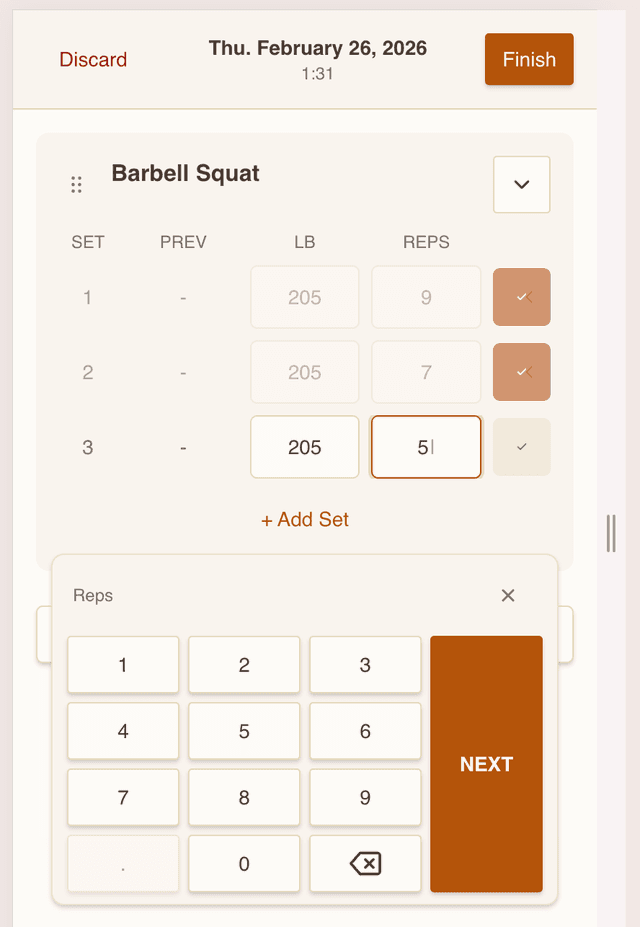
Challenge
Most fitness apps overload users with lengthy setups, unnecessary taps during logging, and cluttered interfaces. The challenge was to reduce tap-heavy flows and create an intuitive UI that stayed out of the user's way.
Solution
I designed Reps to make logging effortless while bringing in tools users usually leave the app to access, like chat-based AI coaching and YouTube form videos.
Results
The result was a faster, cleaner workout flow, so users spend less time on their phones and more time training.
Logging your workout should not be a heavy lift. Secondary research revealed that gym-goers were frustrated with high-friction fitness trackers, including lengthy setups, 5+ tap set logging, repetitive entries, and leaving the app for other commonly used tools. Reps was designed for lifters who want to train, not wrestle with their tracking app. From quick-start routines to simplified set logging, every interaction was designed to reduce friction. To keep users in flow, I embedded tools they usually open elsewhere, including chat-based AI guidance and YouTube form support. The outcome is a clean, intuitive experience that keeps attention on performance, not interface management.
Research and Iterative Design
Turning research into design direction
Reps is an example of how I blend UX research and rapid, iterative design. I used secondary research from Reddit threads and YouTube app reviews, plus personal testing of the main fitness apps on the market, to better understand user needs and pain points. After cataloguing recurring issues, I synthesized them into one core problem: users were frustrated by how often they had to interact with their phone during workouts. That insight became clear when many Reddit commenters said their preferred workout tracker was still pen and paper.
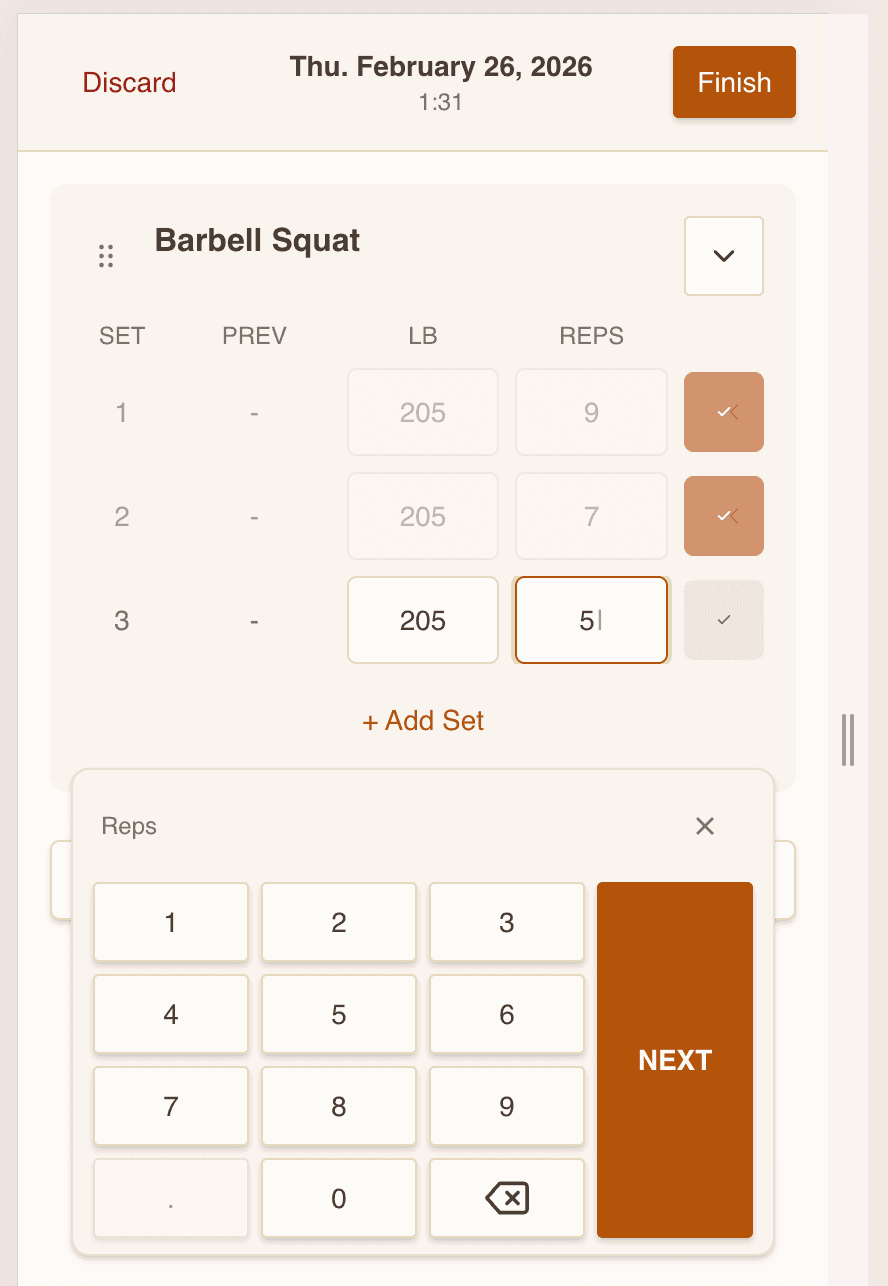
3 Tap Set Logging
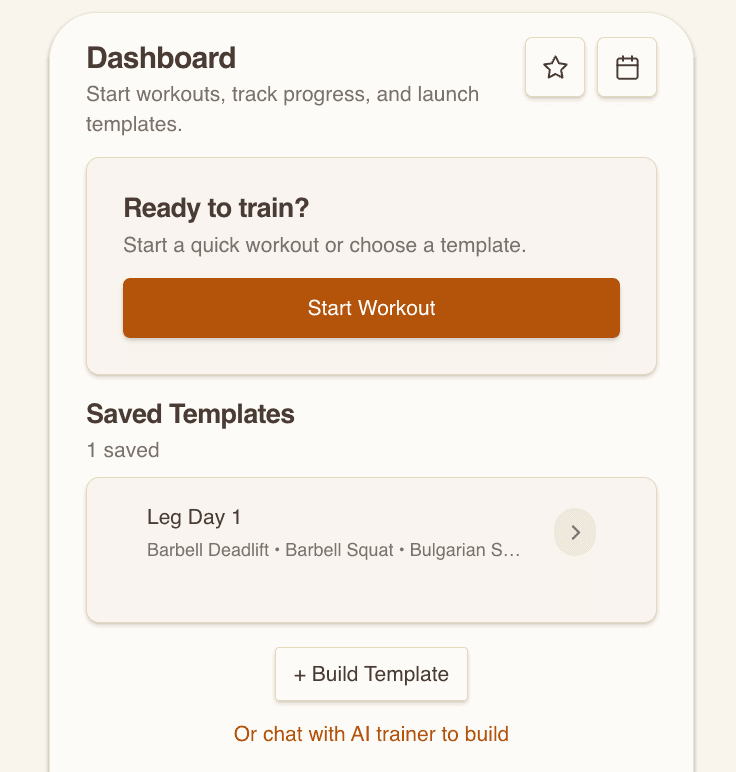
Quick Start flow
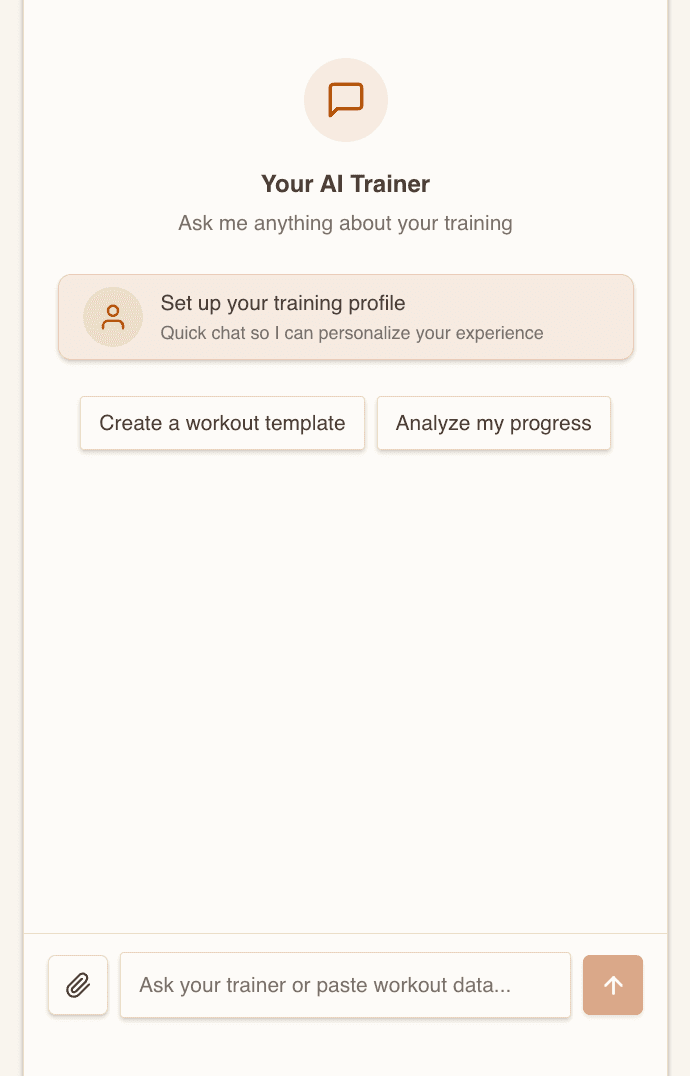
In-app coaching
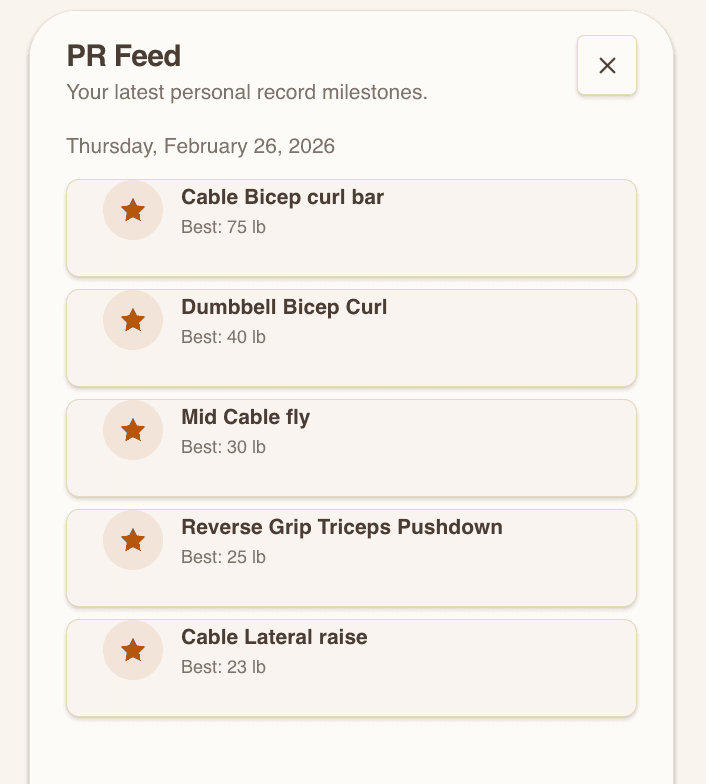
All your recent PRs at a glance